
How to choose an industrial cutting technology
Compare blade, laser, ultrasonic and rotary cutting by material, edge quality, volume, geometry and process integration before choosing a technology.
There is no universally best cutting technology. The right choice depends on material, geometry, thickness, edge finish, volume and how the part must leave the process. This guide organizes the main criteria for comparing four common industrial cutting families without turning the decision into a brand contest.
Before comparing technologies, define the material, thickness, input format, part geometry, tolerance, production volume and required edge finish. The same material may call for different solutions when thickness, design or productivity changes.
Also distinguish full cutting from kiss cutting, individual parts from continuous production, and sheet-fed material from roll-fed material. In many projects, the correct technology only becomes clear after a sample or cutting test.
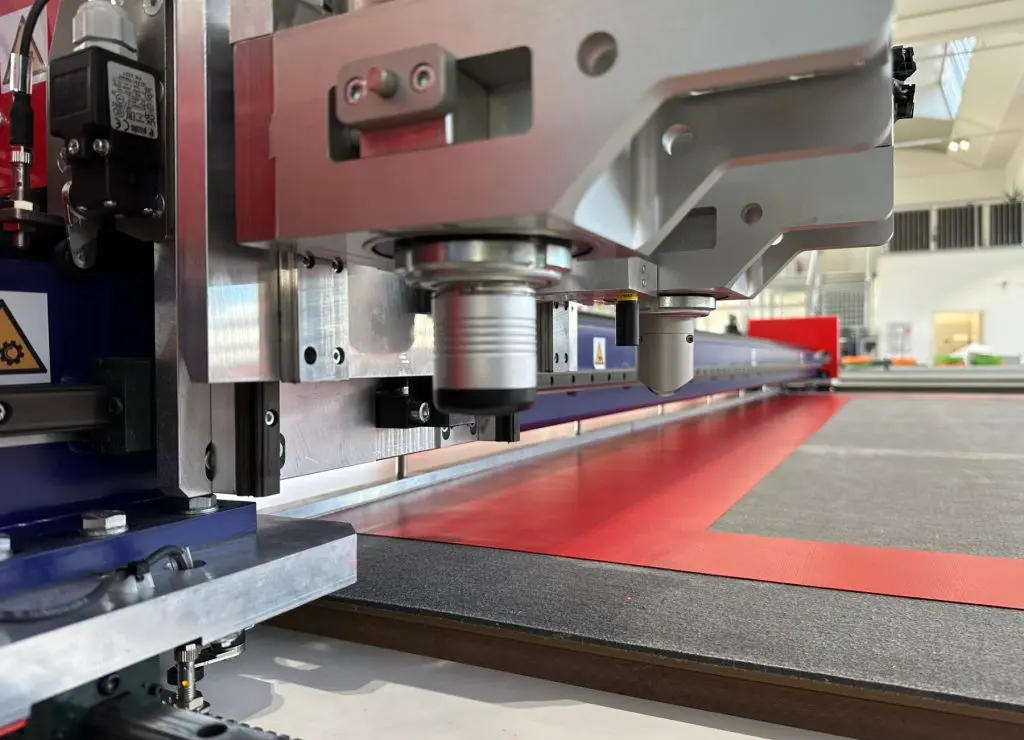
Oscillating blades cover a broad range of soft to medium-density materials and, with the appropriate tool, thicker or tougher materials as well. They are particularly useful when the application involves varied contours, frequent design changes and digital cutting without a thermal process.
Because separation is mechanical rather than thermal, there is no heat-affected cutting zone. Blade geometry, oscillation stroke, speed and material hold-down should be matched to hardness, thickness and minimum contour radius.
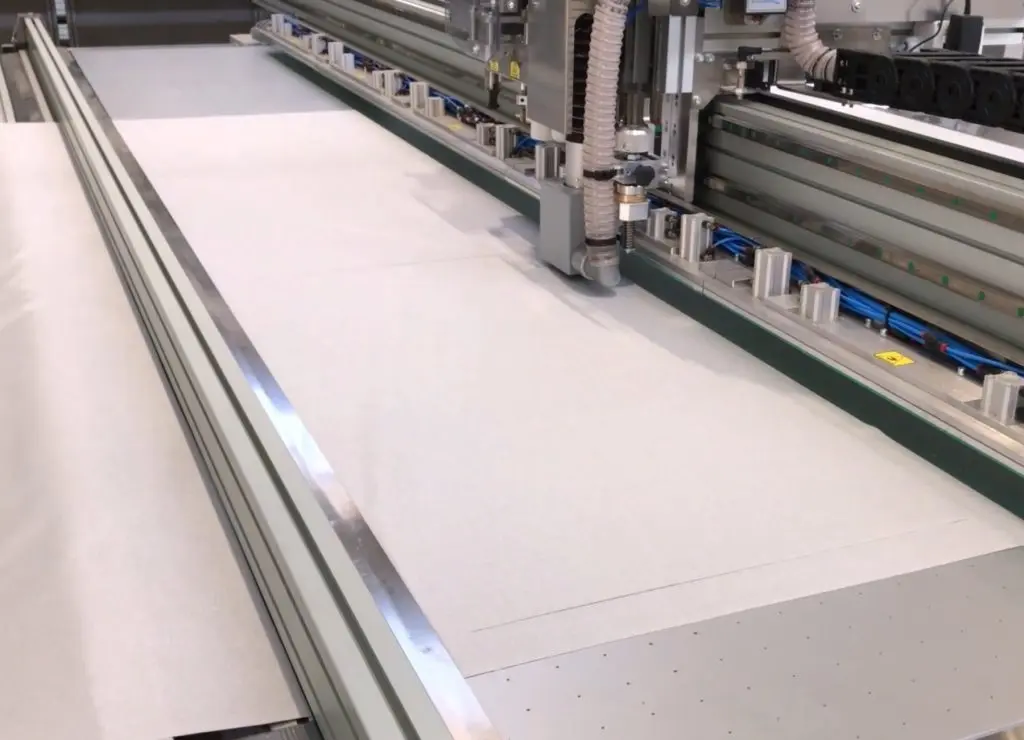
Rotary tools use a circular blade, either powered or pressure-driven. On textiles, nonwovens and selected technical materials, rotation reduces drag on the material and helps separate fibers cleanly, supporting speed and stability on continuous paths.
It is especially relevant when the material is flexible or fibrous and throughput matters. Very tight geometries, high thicknesses or materials outside the tool range may require another technology or a specific configuration.
Laser separates the material without mechanical contact and can reproduce detailed geometries with high repeatability. On some synthetic textiles, heat can also seal the edge and reduce fraying.
The same thermal effect can create limitations. Melting, discoloration, residues, fumes and chemical compatibility must be assessed. Some materials, including PVC-containing compositions, should not be laser processed because hazardous gases and residues can be generated. The actual material composition must therefore be known before selecting laser.
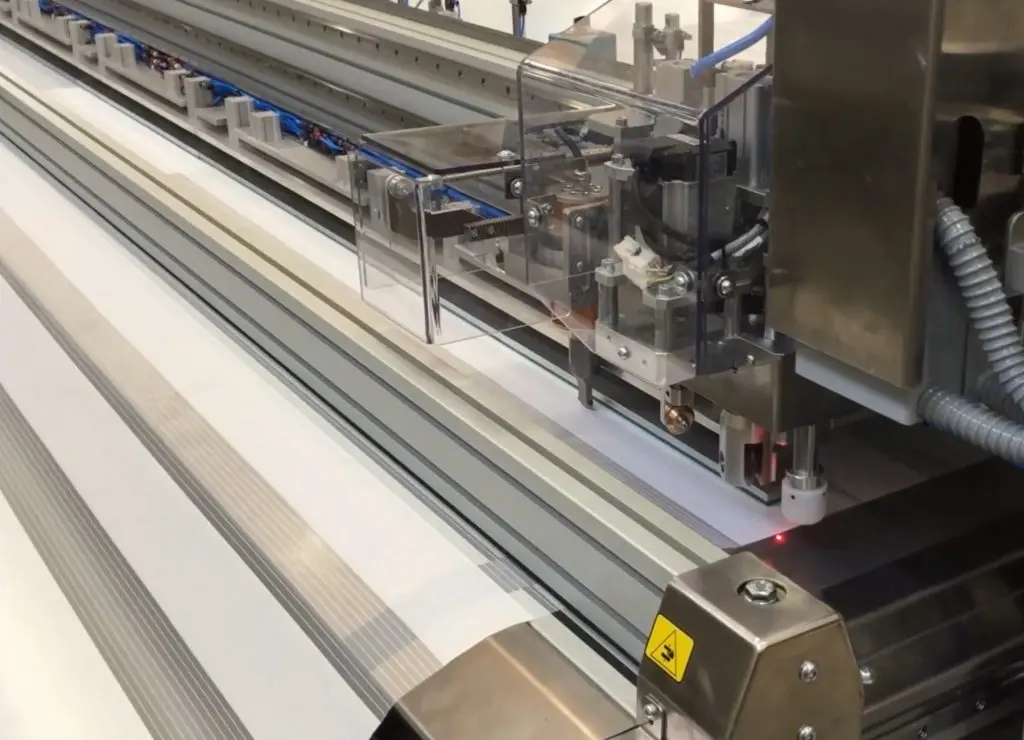
Ultrasonic cutting uses high-frequency vibration and is applied to thermoplastics, films, textiles, woven and nonwoven materials, among other compatible applications. On suitable synthetic materials, it can cut and seal the edge in the same operation, reducing fraying or fiber opening.
Performance depends strongly on material composition. Thermoplastic content, thickness, basis weight, textile construction and tooling geometry all influence the result. When a sealed edge is part of product performance, ultrasonics should be considered early.
1) Material and composition. 2) Geometry and minimum radii. 3) Thickness and number of layers. 4) Required edge condition, such as cold cut, sealed edge or thermal control. 5) Production flow, including feeding, unloading, nesting and target throughput. A technology that works well in a sample test may not be the best choice once the complete production flow is considered.
Whenever the material is unfamiliar, composition varies, edge aesthetics are critical, tolerances are tight, thermal risk exists or production volume is significant, a real sample should be part of the decision. A technical datasheet helps, but it does not replace the material's actual behavior in the process.
The test should evaluate more than whether the machine can cut: edge quality, deformation, speed, hold-down, repeatability, tool wear, debris generation and part removal also matter.
Gather material name and composition, thickness or basis weight, input format, maximum dimensions, drawing or photo, tolerances, required finish, production per shift, current process, main difficulty and, whenever possible, a physical sample.
With these data, the question changes from 'which machine is better?' to 'which technology delivers the required result on this material at this production rate?'.
Send information about your operation for a technical and commercial analysis.