
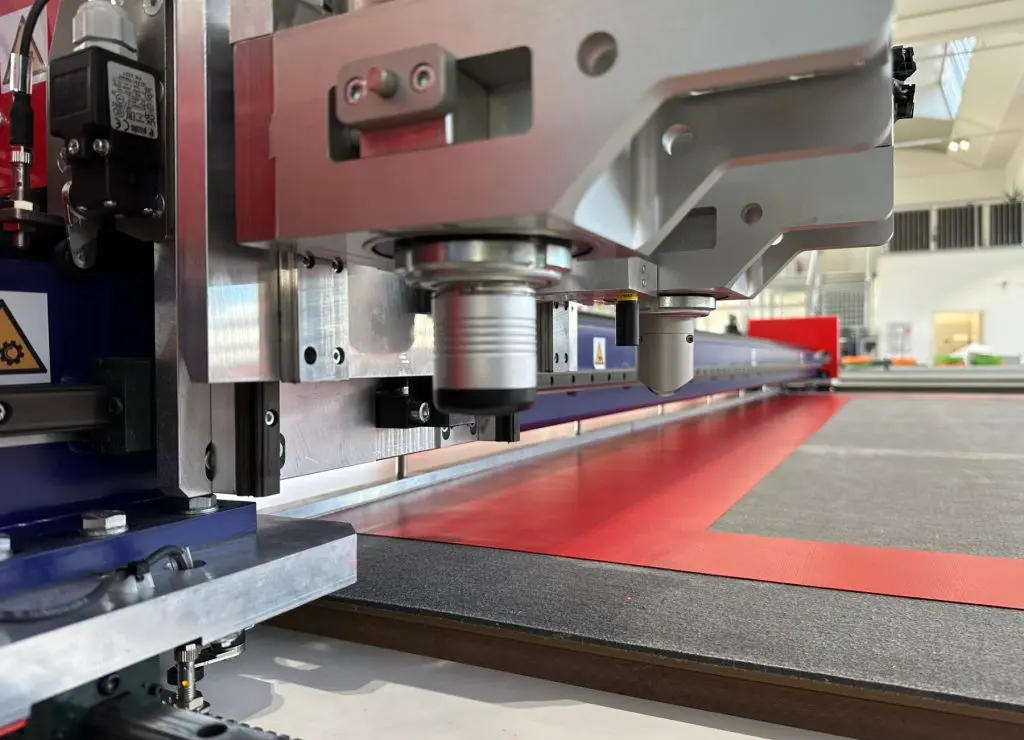
 Lâmina
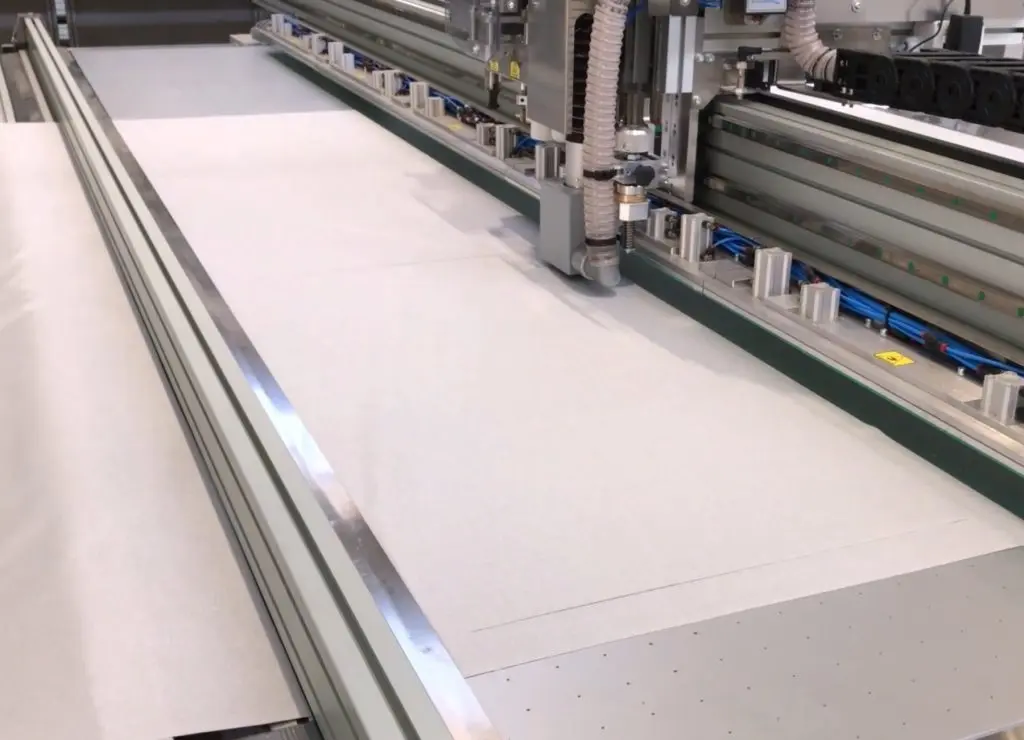 Laser
Laser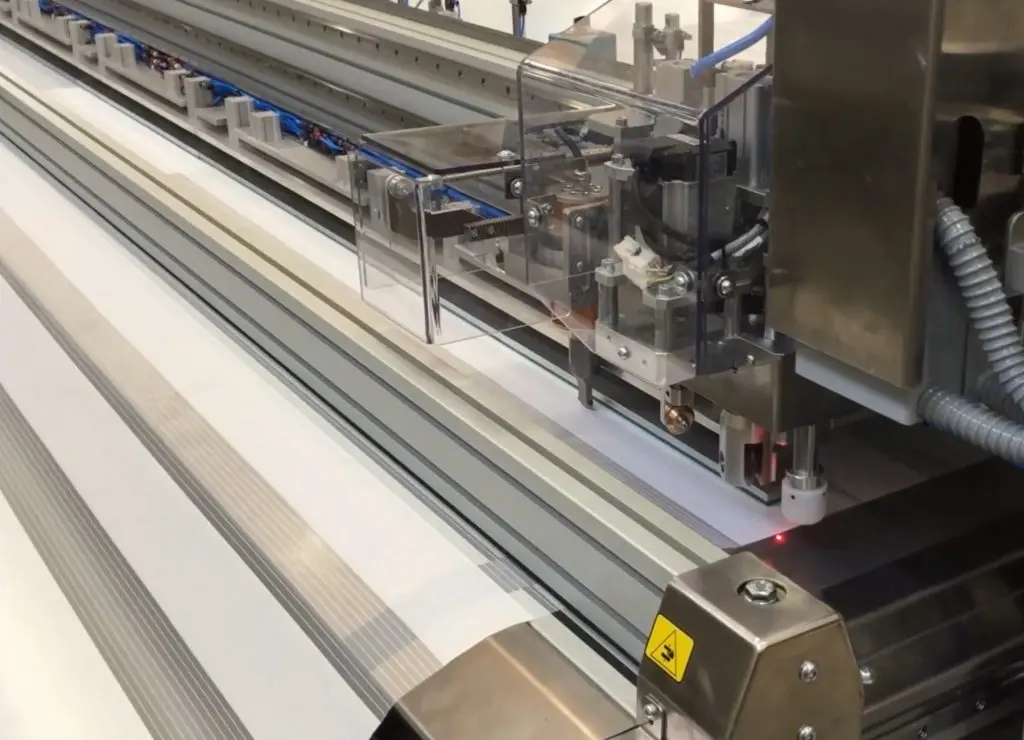 Ultrassom
 Rotativo
How to choose an industrial cutting technology
Compare oscillating blade, rotary cutting, laser and ultrasonics by material, geometry, edge finish, productivity and testing needs.
There is no universally best cutting technology. The right choice depends on the material, thickness, geometry, required edge quality, production volume and how cutting must integrate with the rest of the process. The safest approach is to compare how each process behaves in the real application.
Before comparing equipment, define the material and its construction: rigid or flexible, homogeneous or multilayer, sheet or roll, thermoplastic or heat-sensitive. Then document thickness, dimensions, tolerances, final shape, volume and whether kiss cutting, edge sealing or continuous processing is required.
These variables can completely change the appropriate technology. The same geometry may be straightforward in a foam and require a different approach in a laminate, technical textile, film, adhesive material or composite.
Blade cutting works through mechanical contact. On digital cutting tables, fixed, oscillating or tangential tools can address different materials and thicknesses. It is especially useful when avoiding a thermal process matters and when production requires frequent geometry changes.
Performance depends on blade type, angle, stroke, speed, material hold-down and cutting resistance. Fibrous materials, foams, rubbers, textiles, leather, board and many composites may require different tools, so sample testing remains important.
Laser cutting is contactless and can reproduce complex geometries without a dedicated physical tool for each shape. On compatible synthetic materials, heat can melt and seal the edge, reducing fraying in textile applications.
The trade-off is the thermal effect itself. Power, speed, focus and material composition influence edge quality, fumes, darkening and the heat-affected area. Chemical compatibility must also be known: materials that release hazardous gases during laser processing must not be cut this way.
Ultrasonic cutting transfers high-frequency vibration to the tool. This microscopic motion reduces friction and cutting force, helping to limit deformation in certain materials.
The technology is used on thermoplastics, films, textiles, rubbers and some composites. With thermoplastic materials, some configurations can cut and seal the edge at the same time. Results depend on frequency, tool geometry, support and material composition.
Rotary cutting is particularly relevant to continuous roll-to-roll converting. Geometry is produced with rotary tooling and can be integrated with lamination, adhesive application, liner handling, printing, inspection and rewinding.
When shapes repeat and production is continuous, registration, web tension and tooling stability become critical. Frequent design changes, however, must account for tooling time and cost.
Material and composition: confirm mechanical, thermal and chemical compatibility.
Thickness and stiffness: evaluate cutting force, depth and dimensional stability.
Geometry: complex contours, small radii and kiss cutting can favor different architectures.
Edge quality: check burrs, compression, sealing, darkening, fraying or deformation.
Volume and repetition: balance changeover flexibility against production throughput.
Input format: sheet, board, mat or roll changes the automation required.
Integration: consider feeding, registration, tension, lamination, adhesive application, inspection and rewinding as part of the process.
Datasheets help rule out incompatible options, but real industrial materials vary in composition, batch, coating, liner, moisture, thickness and mechanical behavior. When the decision affects edge quality, tolerance or productivity, testing the real sample reduces risk.
For an application review, send the material, input format, thickness, width, drawing or geometry, expected volume, current process and the main problem to solve. With these inputs, the comparison becomes application-specific rather than generic.
Send information about your operation for a technical and commercial analysis.